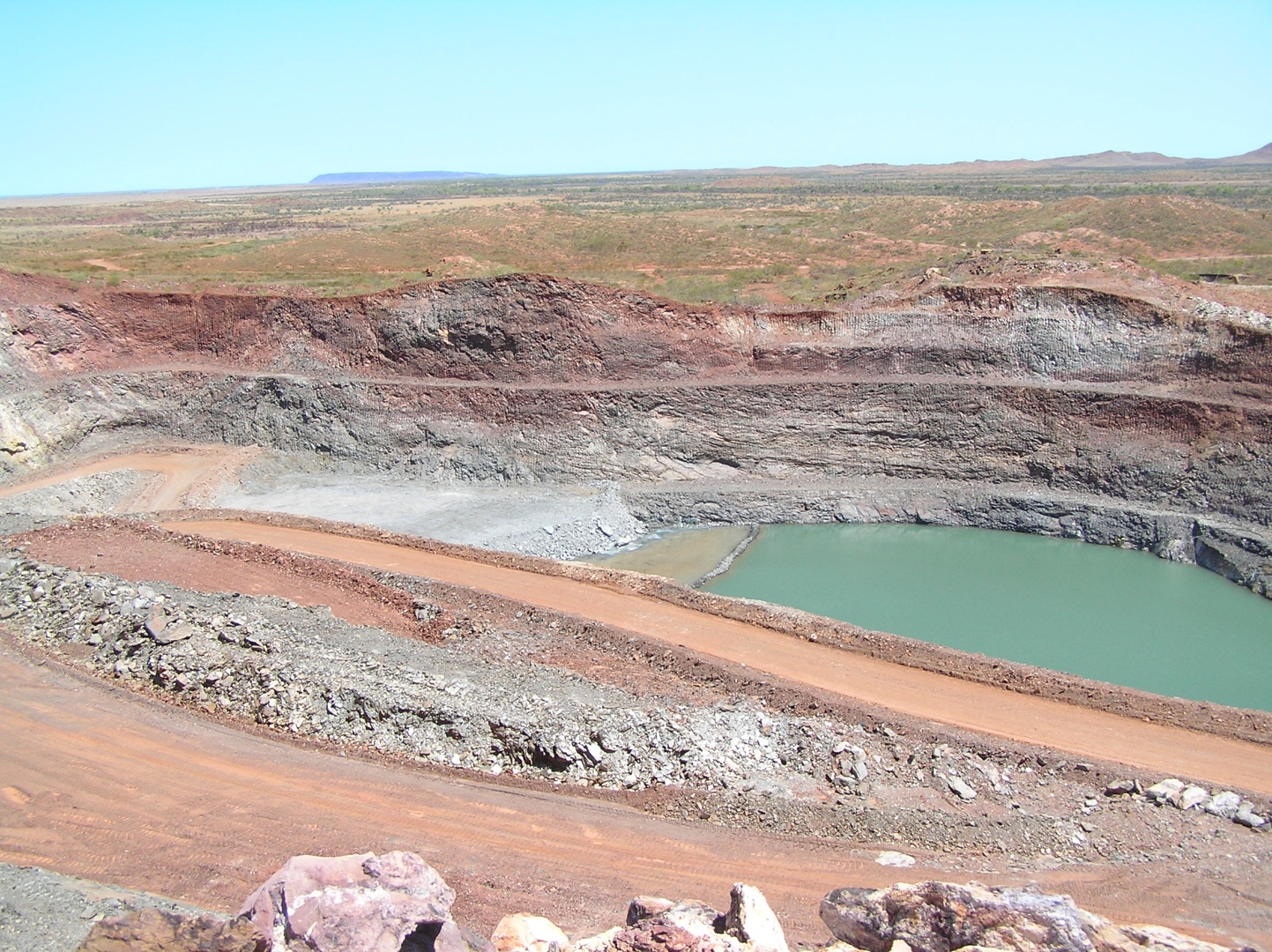
Situation Overview
A Western Australian mining company engaged Sceptre Strategic after its mine site had been classified as a contaminated site under the Contaminated Sites Act 2003 (WA) — the principal legislation governing the identification, investigation, and remediation of contaminated land in Western Australia, administered by the Department of Water and Environmental Regulation (DWER). The contaminated site classification had triggered a series of statutory notifications and requests from DWER: requests for updates on the company's plans to manage the site, requests for investigation reports, and requests for a site management plan.
By the time the Practice was engaged, those requests had been substantially ignored for three years. The company had no functional relationship with DWER. Correspondence had gone unanswered. The regulator's patience, and the window for a cooperative resolution, was narrowing.
The Challenge
The Contaminated Sites Act 2003 (WA) establishes a classification system for contaminated sites ranging from "contaminated — remediation required" to "possibly contaminated — investigation required" and other classifications, each of which carries specific obligations for the person responsible (the "liable party" — typically the current landowner, occupier, or the person who caused or contributed to the contamination). Once classified, the liable party must comply with DWER's requirements, which can include preliminary and detailed site investigations, remediation action plans, and ongoing monitoring and reporting.
The client's problem was not technical. It was relational. Three years of unanswered DWER requests had left the company with no credibility at the department and no framework for moving forward. DWER had the authority to escalate (through direction notices, enforceable undertakings, or referral for prosecution), and the history of non-response provided ample basis to do so.
The client also did not understand its obligations. The classification notice and DWER's subsequent correspondence had not been properly explained to the company's decision-makers. Management did not know what was required, what the consequences of continued non-response were, or what a credible path to resolution looked like. Before any regulator engagement could proceed, the client needed to understand its own position.
Approach
Client Education and Obligation Assessment
The first step was to work directly with the client's management to ensure they fully understood the classification and its implications. The principal walked the client through the Contaminated Sites Act 2003 (WA) framework in plain terms: what the classification meant, what DWER had the authority to require, what the consequences of continued non-engagement were, and what a realistic path to resolution looked like given the three-year history.
This was not a peripheral task. A client that does not understand why it is being asked to do something, or that believes the regulator's requests are negotiable, cannot provide the consistent engagement that rebuilding a functional relationship requires. Understanding precedes action.
Structured Regulator Re-Engagement
Once the compliance position was clear, the principal opened direct contact with the relevant DWER officers. The approach was deliberate: acknowledge the history of non-response without minimising it, show that the client's posture had changed, and present a clear framework for what would be provided and when.
The initial contact did not make promises that could not be kept, a common error after a period of neglect. Instead, it set a structured communication schedule: a timeline for specific deliverables, a commitment to respond to all DWER correspondence within defined timeframes, and a proactive update routine so that DWER would receive information before it needed to ask for it.
Holding that schedule, without exception, was what rebuilt the relationship. DWER received what it was told it would receive, when it was told it would receive it. Over time, reliable structured engagement replaced the previous pattern of silence and deferred response.
Site Management Plan Development
In parallel with the regulator re-engagement, the principal managed the development of a site management plan — the primary deliverable DWER required to demonstrate that the liable party had a credible, structured approach to managing the contamination and preventing further risk to human health and the environment. The plan addressed the nature and extent of contamination on the site, current and proposed site uses, the risk pathway analysis, proposed management measures, monitoring requirements, and reporting obligations.
The plan was drafted to address DWER's stated concerns specifically, not as a generic template document. The difference between a site management plan that satisfies a regulator and one that generates a further round of information requests is usually how clearly it shows that the preparer understands the specific site and the regulator's specific concerns.
Ongoing Stakeholder Communication
The principal ran communication with all relevant stakeholders throughout the engagement: DWER officers, the client's internal management, and any other parties to the compliance process. Responses to DWER information requests were prepared, reviewed, and lodged on time. Incoming correspondence from DWER was actioned promptly rather than left in a queue. The compliance communication schedule, previously non-existent, was re-established and maintained.
"Three years of silence is not a problem that a single good submission resolves. It is a problem that consistent, reliable, proactive communication resolves — submission by submission, response by response, over a sustained period."
Outcome
Result
The functional relationship with DWER was re-established. The three-year period of unanswered correspondence was addressed through a structured re-engagement process that acknowledged the history and demonstrated a credible change in approach. DWER officers returned to a cooperative working posture with the client.
The site management plan was prepared and submitted to DWER as required. All subsequent DWER requests for updates, reports, and information were responded to within the agreed timeframes. The client exited the immediate compliance crisis with a functioning regulatory relationship, an accepted site management plan, and a communication schedule that prevented the drift back into non-response.
The client's understanding of its obligations under the Contaminated Sites Act 2003 (WA) was materially improved: management understood what the classification meant, what was required of them, and why consistent engagement with DWER was not optional. The engagement addressed both the symptom (the unanswered correspondence) and the underlying cause (the client's incomplete understanding of its position).
Why It Mattered
Under the Contaminated Sites Act 2003 (WA), a liable party that does not comply with DWER's requirements faces escalating enforcement tools — including enforceable undertakings, direction notices, and potential prosecution. The Act also provides for the publication of contaminated site details on the public register, which carries reputational consequences for listed operators that extend well beyond the immediate compliance position.
Three years of silence had not made the problem disappear. It had accumulated regulatory risk without reducing the underlying liability. Every unanswered request was a further entry on the record of non-compliance. Restoring structured, sustained communication was the only path to resolution, and it required both the technical capability to prepare defensible responses and the discipline to hold the schedule without gaps.
This case reinforced a principle that applies across regulatory relationships: regular, reliable communication is not just good practice. In a contaminated sites context, it is the difference between a cooperative path to site reclassification and an enforced one.
Capability Demonstrated
This engagement drew on Sceptre Strategic's capabilities in compliance recovery, contaminated site regulatory management, and sustained stakeholder communication. Relevant service areas include:
- Environmental Compliance — contaminated site classification management under the Contaminated Sites Act 2003 (WA), DWER engagement, site management plan preparation, and ongoing monitoring and reporting
- Retained Compliance Officer — ongoing regulator relationship management, structured communication schedule maintenance, response to statutory information requests
- Mining Proposals & Work Plans — broader regulatory approvals experience applicable to the compliance recovery context, including DMPE relationship management and Mine Closure Plan obligations
Related Case Studies
- Legacy Copper — Contamination Regulatory Resolution — a parallel contamination case requiring technical intervention alongside regulatory engagement in a remote northern Australia context
- Mining Proposal Approved Following Sustained Relationship Breakdown — the same pattern of relationship repair applied to a DMPE Mining Proposal context in Western Australia