Situation Overview
Design package developed for the client. Demonstrates how legacy copper contamination can be addressed with mineral processing technology to deliver both environmental compliance and commercial value.
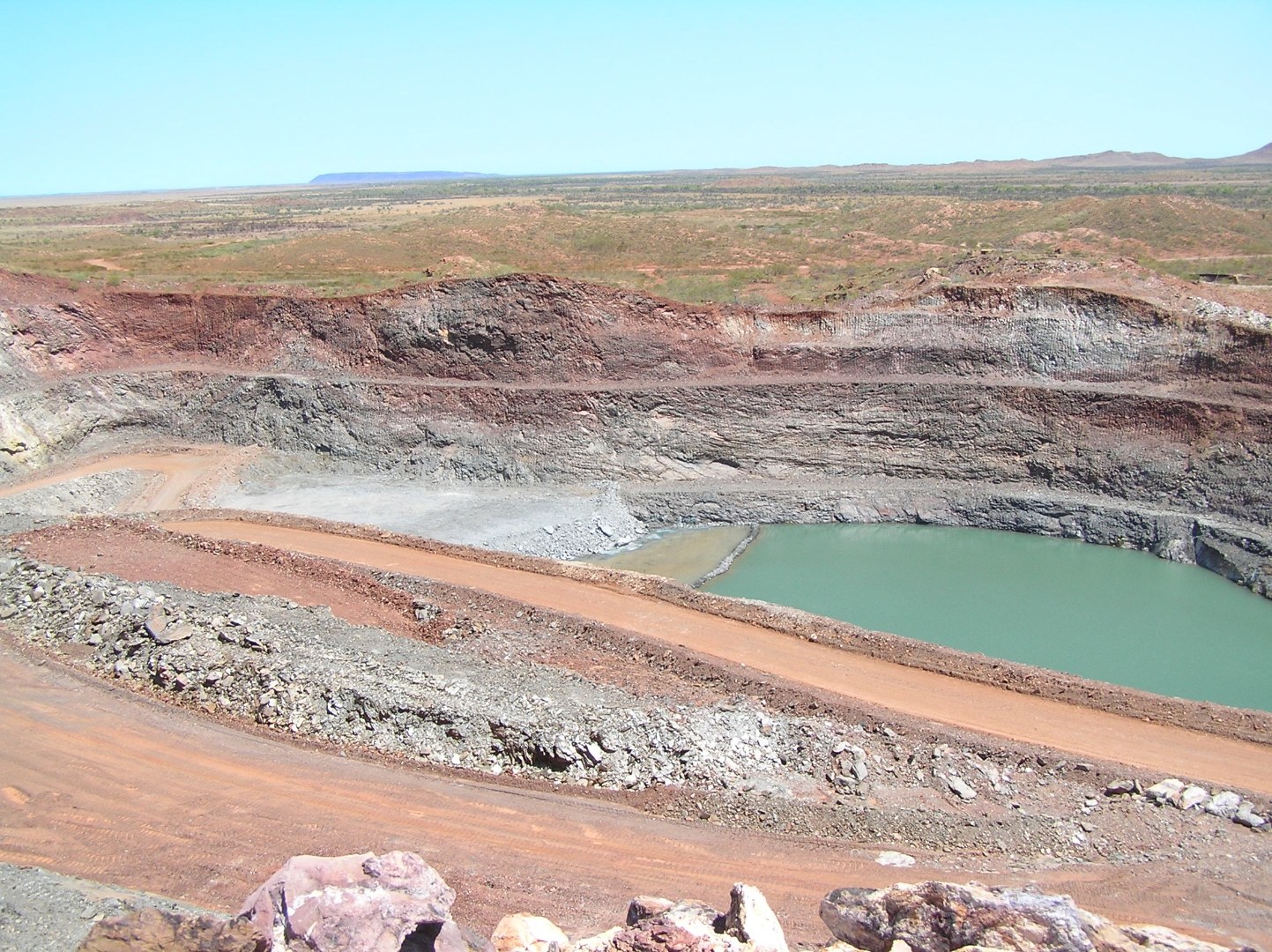
A mining tenure holder in remote northern Australia held a tenement that included a legacy open-cut mine — an operation predating the current owner's involvement — that had been generating an ongoing environmental liability. Each wet season, rainfall infiltrated the open pit and mobilised copper-bearing water into an adjacent watercourse. By the time Sceptre Strategic's principal was engaged, contamination had been detected at monitoring points up to twelve kilometres downstream of the site.
The site presented the relevant environmental regulator with a contaminated sites classification issue. The client was required to investigate and assess the current conditions at the site that had contributed to environmental contamination off-site, design a stable monitoring programme and logistics network to track and record contaminants off-site, and provide a suitable method for ensuring no further contaminated water was discharged off-site. The combination of remote location, extreme seasonal access constraints, and the technical complexity of the water treatment requirement made this a materially more difficult problem than a comparable site in an accessible location.
The Challenge
Legacy contamination at remote mine sites presents a distinctive set of technical and logistical problems that rarely arise together in urban or accessible industrial settings. At this site, three challenges were present simultaneously.
First, the contamination pathway was dynamic. The copper plume was not a static residue — it was actively generated each wet season as rainwater entered the pit, dissolved copper from the pit walls and sediments, and discharged as copper-laden water into the adjacent watercourse. Without intervention at the source, the plume would continue to extend and deepen with each seasonal cycle.
Second, the remote location created a chain-of-custody problem for environmental monitoring. Groundwater and surface water samples collected at a remote site must reach the accredited laboratory within strict holding-time requirements. In accessible locations this is routine. At this site, the logistics of getting samples from remote field locations to a certified laboratory within the required window demanded a purpose-designed collection and transport system.
Third, the technical solution, treating the pit water to bring contaminant concentrations below discharge limits and managing the dry-season drawdown to maintain adequate free-board ahead of the next wet season, required engineering expertise in water chemistry, mineral processing, and site hydrology working in integration.
Approach
Groundwater and Surface Water Monitoring Programme Design
The principal participated in the design and implementation of a comprehensive groundwater and surface water monitoring programme covering the site and downstream watercourse. The programme established a network of monitoring points from the pit lake itself to the extent of the known contamination plume twelve kilometres downstream. Sample types, sampling frequency, analytical parameters, and target detection limits were specified in alignment with the regulatory framework and the site's hydrogeological conditions.
The monitoring programme served two functions: it provided the evidentiary baseline for demonstrating the extent of contamination, and it established the ongoing record against which the effectiveness of the water treatment programme would subsequently be measured.
Remote Logistics System for Sample Chain of Custody
The principal developed a dedicated logistics system to address the holding-time constraint for samples collected at the remote site. This included coordinating vehicle scheduling, cold-chain packaging, courier staging, and laboratory turnaround commitments to ensure that samples collected in the field arrived at the certified laboratory within the recommended holding times for each analyte class.
In practice, this required the kind of logistical planning that is rarely applied to environmental sampling programmes — because in most site contexts it is not needed. At this site, it was the difference between a monitoring programme that generated defensible data and one that did not.
Pit Water Treatment Programme
Drawing on direct experience in laboratory testing, chemistry, and mineral processing plant and equipment, the principal developed a proposed pit water treatment programme designed to remove contaminant metals from the pit water and enable the discharge of clean water from the site. The approach utilised mineral processing technology to capture and remove soluble copper and to adjust pH levels, creating water suitable for off-site discharge within the relevant criteria limits. An additional benefit of the proposed treatment project was that the copper metal removed from the pit lake water could be sold to offset operating costs.
The proposed programme was designed around the site's seasonal hydrology. Treatment and discharge operations during the dry season would progressively draw down the pit lake level, creating the free-board capacity necessary to accommodate the volume of wet-season inflow in the ensuing season without overflow. The relationship between treatment rate, discharge volume, dry-season duration, and wet-season inflow was modelled to establish a drawdown target that was both achievable and regulatory compliant.
"A twelve-kilometre downstream plume is not an environmental incident — it is a site that has been generating contamination every wet season for years. The only answer is engineering at the source, not monitoring at the fringe."
Outcome
Result
The monitoring network was designed to deliver defensible, chain-of-custody compliant data across the full extent of the downstream contamination plume. The proposed dry-season drawdown programme was designed to progressively reduce the volume of copper-laden water stored in the pit lake, removing the primary source of wet-season discharge to the watercourse.
The proposed water treatment process was designed to achieve the required reduction in dissolved copper concentrations, enabling clean-water discharge from the site within the agreed regulatory framework. The pit lake drawdown programme was designed to establish the free-board headroom necessary to manage the following wet-season inflow without a recurrence of uncontrolled overflow.
Why It Mattered
A twelve-kilometre downstream contamination plume is a significant regulatory liability. Under contaminated sites legislation, a tenure holder with a classified contaminated site faces ongoing regulatory obligations — investigation, reporting, remediation, and long-term monitoring — that continue until the site is reclassified. The longer a contamination source remains unaddressed, the larger the remediation liability grows and the further the regulator's confidence in the operator's capability erodes. The outcome was a proposal technically sound, defensible to the regulator, and structured to deliver both environmental compliance and commercial value.
This engagement demonstrated that remote-site contamination problems can be resolved through the integration of environmental monitoring rigour, purpose-designed logistics, and engineering expertise in water treatment and hydrology — capabilities that are rarely combined in a single advisory engagement. The outcome was a technically sound and regulatory-compliant programme that gave the client a credible path to site reclassification.
Capability Demonstrated
This engagement drew on Sceptre Strategic's capabilities across environmental compliance, technical advisory, and remote-site operational management. Relevant service areas include:
- Environmental Compliance. Contaminated land regulatory engagement, monitoring programme design, and reporting to environmental regulators under the Waste Management and Pollution Control Act 1998 (NT)
- Technical Reporting & Data Room — monitoring data management, laboratory coordination, regulatory reporting of groundwater and surface water results
- Safety & Risk Systems — chemical treatment risk assessment, hazardous materials management in remote-site water treatment operations
Related Case Studies
- Three-Year Contaminated Site Notice — Resolved — navigating a three-year history of unanswered DWER correspondence under the Contaminated Sites Act 2003 (WA)
- Mining Proposal Approved Following Sustained Relationship Breakdown — rebuilding regulator trust as the prerequisite for a successful statutory approval