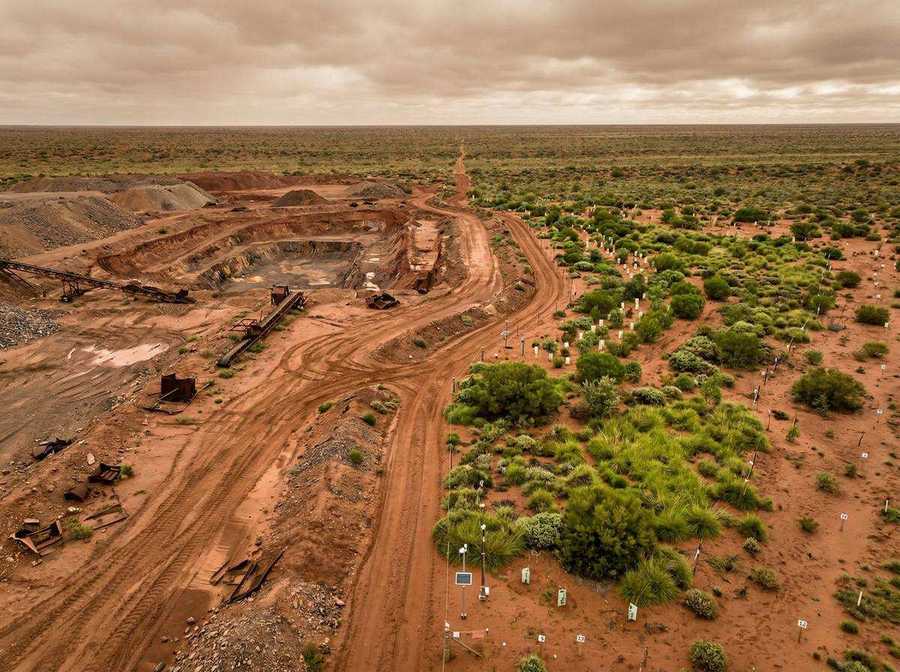
The Core Problem
Most NT mine closure plans are written to satisfy a regulator, not to actually close the mine. They are drafted to a level of detail that gets an authorisation approved, then quietly carried forward year after year. The harder questions — what the final landform really looks like, what the post-closure monitoring obligation is, what the closure cost actually is in today's dollars — get deferred until they cannot be deferred any longer.
That gap matters in any jurisdiction. In the Northern Territory it matters more, because the regulatory framework around closure planning has just changed, and the four-year transition window for existing operators is shorter than most realise.
The Framework Just Changed — 1 July 2024
For more than two decades, mining activity in the Northern Territory was authorised under the Mining Management Act 2001 (NT) (MMA 2001). Section 40 required every Authorisation to be supported by a Mining Management Plan (MMP) that included "a plan and costing of closure activities". Section 43 required a security to be lodged — in practice, an environmental bond calculated on disturbance — to cover the cost of rehabilitation if the operator failed to deliver. The MMP was reviewed at intervals set in the Authorisation, and amended when activities changed.
On 1 July 2024 that regime was repealed. The Environment Protection Legislation Amendment Act 2023 (NT) replaced MMA 2001 authorisations with a new environmental (mining) licence under the Environment Protection Act 2019 (NT). The same Amendment Act commenced the Legacy Mines Remediation Act 2023 (NT), which runs alongside the licensing regime and provides the framework for managing legacy sites and the Mining Remediation Fund.
The new licence comes in three risk-based categories — standard, modified, and tailored — with the level of regulatory scrutiny calibrated to environmental risk.
| Licence Category | Risk Profile | Closure Plan Treatment |
|---|---|---|
| Standard Condition | Low risk — operator can meet pre-determined criteria | Standard conditions apply; no bespoke closure plan required at lodgement |
| Modified Condition | Low to medium risk — standard conditions adjusted | Adjusted standard conditions; closure addressed through licence variations |
| Tailored Condition | High risk — standard criteria cannot be met | Closure plan and costed closure activities required at application stage under EP Act s.124ZE(3)(g) |
Existing MMA 2001 authorisations and Mining Management Plans were deemed to be authorised under the new regime, but only for a transitional period of four years — until 30 June 2028. Deemed environmental (mining) licences cannot be amended and cannot be transferred. Every operator currently running on a deemed licence has to transition fully into the new framework before that date, and any change in scope, ownership, or activity in the meantime is constrained by the deeming.
"Approved closure plan" and "closeable mine" are not the same thing. The first is a document; the second is a delivered outcome. The transition window is when the gap between the two stops being theoretical.
What "Written to Get Approval" Actually Looks Like
The pattern is consistent across operators, jurisdictions, and commodity types. A closure plan that is written to get approval rather than to close the mine tends to share most of the following features:
- Closure cost estimates that have not been re-priced in years. Unit rates carried forward from the original Mining Management Plan, escalated at CPI if at all, with no engagement with current contractor rates, freight to remote sites, or the actual scope of regrade and revegetation now required given how the disturbance has evolved.
- Geochemistry treated as a one-time exercise. Acid and metalliferous drainage (AMD) characterisation done at approval stage and never refreshed. Kinetic testing skipped. Cover system design assumptions inherited from a feasibility study and never validated against operating-stage waste characterisation.
- Final landform drawings that are conceptual. A diagram of contoured waste-rock dumps and a backfilled void, without bulk-earthworks volumetrics, without a survey-grade design surface, without a drainage analysis. Enough to communicate intent. Not enough to actually build.
- Post-closure monitoring obligations described in a paragraph. No defined parameter list, no defined trigger levels, no defined duration, no defined exit criteria for relinquishment.
- Stakeholder commitments that have not been re-tested. Post-closure land use nominated at approval stage, with no recent consultation — with traditional owners, pastoralists, or downstream water users — to confirm it is still what those parties want.
None of these defects, on its own, is fatal. Together, they are the difference between a plan that gives a regulator confidence at lodgement and a plan that allows an operator to actually walk off the site with a closure certificate.
Financial Assurance — The Number That Matters
Under MMA 2001 s.43, the security amount was calculated on likely disturbance. Under the new EP Act regime, financial assurance continues to be required as a condition of an environmental (mining) licence, and the policy intent is that it cover the full cost of rehabilitation if the operator does not deliver.
The Northern Territory also operates a 1% annual levy on the full environmental bond amount, which feeds the Mining Remediation Fund (now governed by the Legacy Mines Remediation Act 2023). The fund is explicitly a fund of last resort — it does not absolve operators from rehabilitation obligations and is not a substitute for adequate site-specific assurance.
Two operational issues come up repeatedly with NT financial assurance:
- The bond figure is based on disturbance reported in the MMP, not on what is actually on the ground. Where progressive disturbance has outpaced the assumptions in the lodged plan, the bond is structurally undersized. The transition to the new licence regime forces the two to be reconciled.
- The bond figure is based on closure activities described in the MMP, not on closure activities at current cost. Earthworks rates, water-treatment rates, and remote-site mobilisation costs have all moved materially in recent years. A bond calculated against five-year-old unit rates is not a current bond.
Reviewing the closure cost estimate against current rates, current disturbance, and current scope is the single most useful exercise an operator can do before transition. It is also the exercise the operator wants to have done before the regulator does.
What a Closure Plan Built to Actually Close a Mine Contains
The shift from a compliance-grade closure plan to a delivery-grade closure plan is mostly about specificity. The same headings appear; the content underneath them looks different.
Geochemistry and AMD
- Operating-stage waste rock and tailings characterisation — not just feasibility-stage assays
- Kinetic testing where sulphide content warrants it, with results carried into cover design
- A defined geochemical risk position for each waste domain, not just for the project as a whole
- Cover system design with explicit assumptions about infiltration, oxygen flux, and long-term performance
Final Landform and Earthworks
- A survey-grade final landform design surface, not a conceptual diagram
- Bulk earthworks volumetrics that reconcile to actual disturbance
- Drainage analysis that demonstrates long-term stability under design rainfall events
- Pit lake or pit-water management strategy with water-quality predictions
Closure Cost
- Unit-rate build-up from current contractor rates, not historical estimates
- Mobilisation, demobilisation, and remote-site logistics priced explicitly
- Contingency proportionate to the maturity of the design — higher for conceptual elements, lower for tightly-scoped ones
- A defensible position on what the bond should be, not just what the bond currently is
Post-Closure Monitoring
- Defined parameter list for groundwater, surface water, and rehabilitation success
- Defined trigger and response levels, with management actions specified
- Defined duration with explicit exit criteria for relinquishment
- Resourcing plan for who delivers monitoring after the operations workforce demobilises
Stakeholder Position
- Current confirmation — not historic confirmation — of nominated post-closure land use
- Engagement with traditional owners on cultural heritage outcomes through closure
- Engagement with downstream water users on water-quality commitments
- A position on residual infrastructure that may have post-closure value (water bores, roads, accommodation) and who would inherit it
The Transition Plan Operators Should Be Building Now
Every operator currently running on a deemed environmental (mining) licence has a finite window to transition. The work is more involved than swapping a Mining Management Plan for a licence application; it is a chance — and a hard deadline — to bring the closure plan into line with the actual site.
Pre-Transition Closure Plan Health Check
- When was the closure cost estimate last fully re-priced against current contractor rates? If the answer is more than two years ago, the bond is probably wrong.
- Does the disturbance figure in the MMP match what is actually on the ground today, surveyed and verified? If not, the bond is structurally undersized.
- Has the AMD characterisation been refreshed against operating-stage waste, or is it still based on feasibility-stage data?
- Is there a survey-grade final landform design, or a conceptual diagram?
- Are the post-closure monitoring obligations defined to a level that someone could actually deliver and exit — parameters, triggers, duration, exit criteria?
- Has the nominated post-closure land use been re-confirmed with traditional owners, pastoralists, and downstream water users in the last 24 months?
- If transition required a tailored condition licence rather than standard or modified, is the closure plan and costed closure activities ready to be lodged under EP Act s.124ZE(3)(g)?
Where Sceptre Strategic Can Help
Mine closure planning brings together geochemistry, earthworks, water management, financial assurance, regulatory negotiation, and stakeholder engagement. Done well, it protects the licence to operate, the financial position of the parent, and the relationship with the regulator. Done as a paperwork exercise, it postpones liability rather than retiring it.
Sceptre Strategic provides closure planning and environmental compliance support for NT operators including:
- Closure plan health-checks against the new environmental (mining) licence framework
- Closure cost estimate reviews and unit-rate rebuilds for financial assurance
- Transition planning from deemed authorisations to standard, modified, or tailored licences before 30 June 2028
- Environmental compliance and incident reporting under the EP Act and the Legacy Mines Remediation Act
- Retained compliance officer arrangements for operators without an in-house environmental function
- Pre-acquisition rehabilitation due diligence for buyers inheriting NT closure liabilities
Travis Sickerdick, our principal, has 23+ years of operational mining experience across the Northern Territory and other Australian jurisdictions, gained on-site across exploration, open-pit and underground operations, and processing plant build and commissioning. His direct involvement spans mine closure planning, contaminated site management, and regulatory negotiation. We operate nationally.